


The Evolving Cyber Risk Landscape in 2026
The cyber risk landscape in 2026 is more complex and interconnected than ever before. Organizations face new challenges as technology advances and threat actors become increasingly sophisticated. Understanding these changes is essential for selecting the right cyber risk framework and building resilience.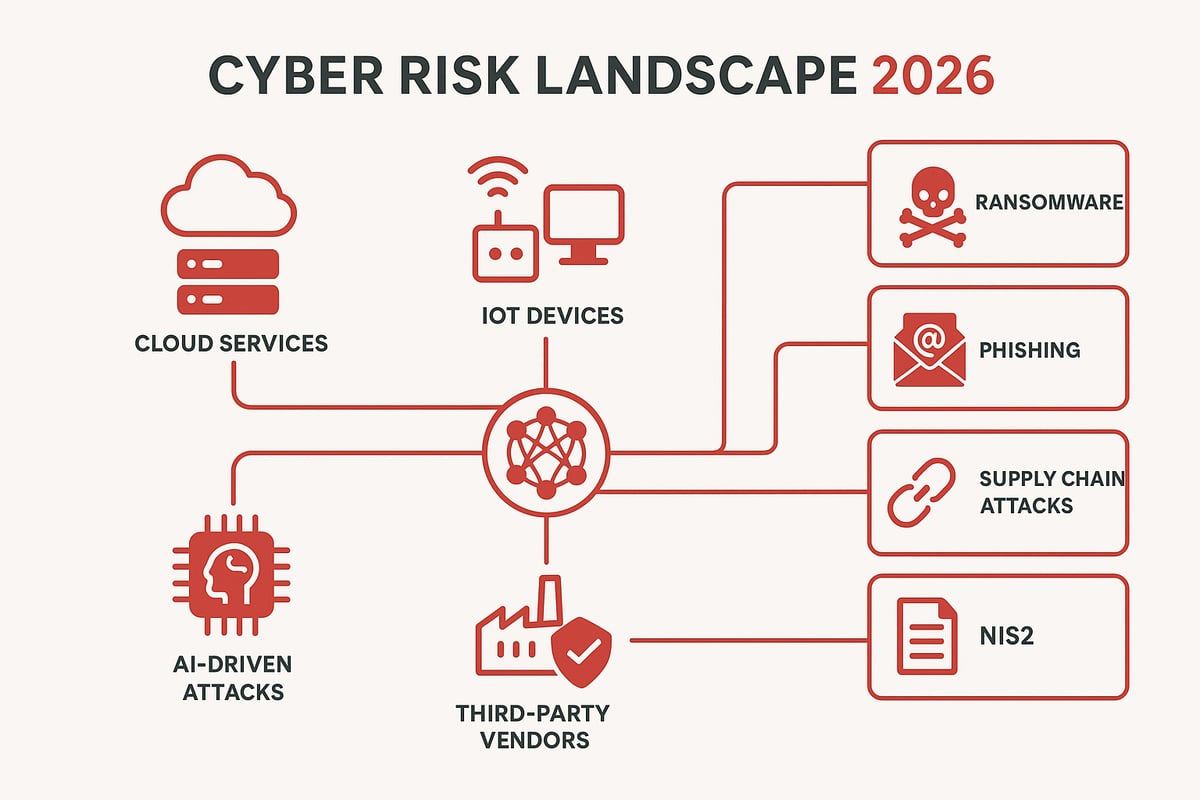
Changing Threat Vectors and Attack Surface Expansion
In 2026, the attack surface has grown dramatically. The rapid adoption of cloud platforms, IoT devices, and remote work means organizations are connected to more endpoints than ever. Each new service or device creates potential entry points for cybercriminals. AI-driven threats and automated attack tools are now commonplace, making it easier for attackers to scale their efforts. According to the Ponemon Institute Third-Party Data Risk Study, the average company shares confidential data with 583 third parties. This reality makes a strong cyber risk framework crucial for managing exposures from ransomware, supply chain attacks, and sophisticated phishing.Regulatory and Compliance Drivers
Regulatory pressure is mounting in every sector. New and updated mandates like NIS2, DORA, and industry-specific rules demand higher standards for cybersecurity. Organizations must now demonstrate greater accountability for third-party and vendor risk, not just their own internal controls. Non-compliance carries steep penalties, including fines and reputational damage. As regulations become more complex, a proactive cyber risk framework ensures that companies stay ahead of requirements and can prove due diligence to regulators and partners.Business Impact and Board-Level Focus
Cyber incidents now have far-reaching consequences. Financial loss, reputational damage, and operational disruptions can threaten an organization’s survival. Boards and executives are deeply involved in cyber risk decisions, recognizing that security is not just an IT issue. Aligning cyber risk framework strategies with business objectives and risk appetite is essential. This approach helps organizations prioritize investments, report risks clearly, and foster a culture of shared responsibility across all levels.The Need for Adaptive Frameworks
Static, checkbox compliance is no longer enough in today’s fast-changing environment. Cyber threats evolve quickly, so organizations need flexible and scalable solutions. An adaptive cyber risk framework supports ongoing improvement and helps teams respond to new challenges as they arise. Leading organizations are moving toward holistic, organization-wide approaches. By embracing continuous assessment and improvement, they stay resilient and competitive, even as the threat landscape shifts. This mindset is now a must for any business that wants to thrive in 2026.Why Cyber Risk Frameworks Matter
In today’s digital world, having a strong cyber risk framework is no longer just a best practice, it is a necessity. As threats evolve and organizations connect with more partners, teams need a reliable way to safeguard their assets and reputation. But what does a cyber risk framework truly offer, and why is it so crucial for us in 2026?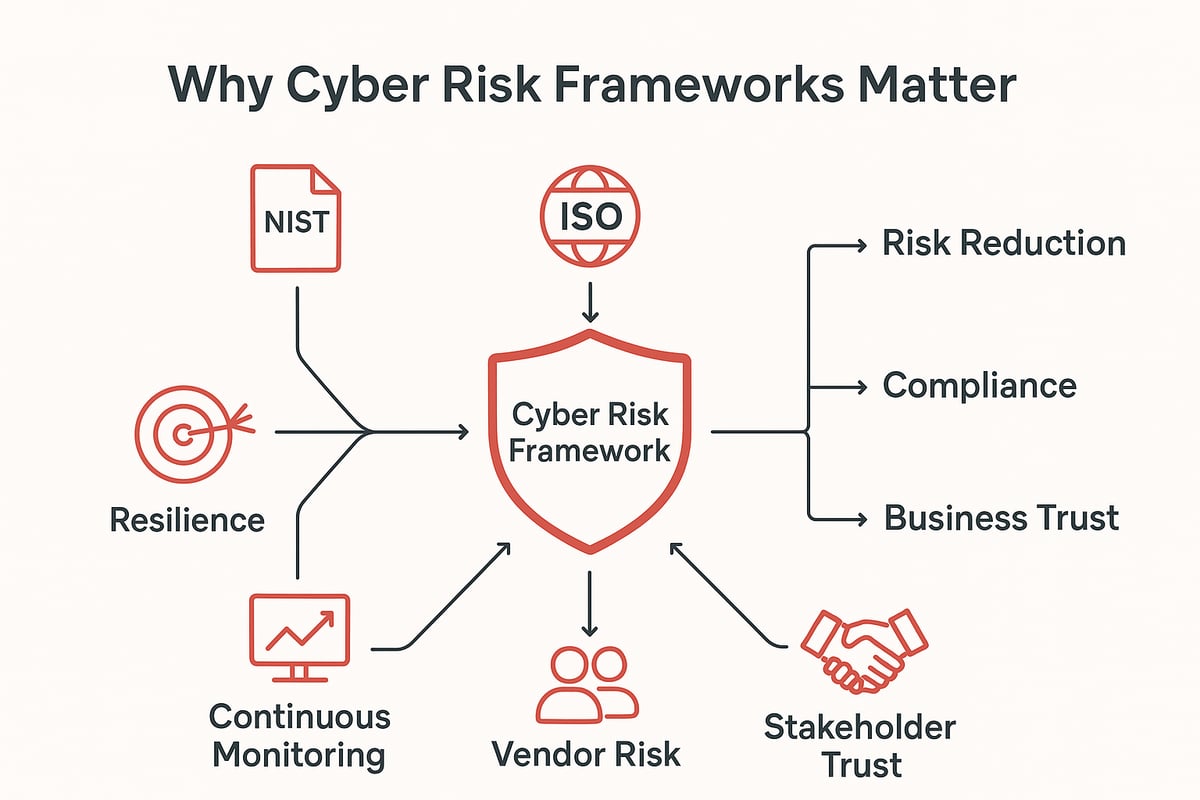 A cyber risk framework is a structured collection of standards, guidelines, and best practices designed to help organizations identify, manage, and reduce cyber threats. Frameworks like NIST and ISO set the foundation for effective security programs. If you are curious about which frameworks lead the industry, explore this Best cybersecurity frameworks overview for a detailed comparison.
Why should we adopt a cyber risk framework? Here are some key benefits:
A cyber risk framework is a structured collection of standards, guidelines, and best practices designed to help organizations identify, manage, and reduce cyber threats. Frameworks like NIST and ISO set the foundation for effective security programs. If you are curious about which frameworks lead the industry, explore this Best cybersecurity frameworks overview for a detailed comparison.
Why should we adopt a cyber risk framework? Here are some key benefits:
- Consistency: Teams use a common language and set of processes for risk assessment, monitoring, and response.
- Alignment: Frameworks bridge gaps between IT, security, compliance, and business units, encouraging everyone to work toward the same goals.
- Due diligence: Regulators, partners, and customers often require proof of strong controls, and a cyber risk framework provides clear evidence.
- Resilience: By following a documented, repeatable approach, organizations can bounce back quickly from incidents and disruptions.
- Trust: Transparent and auditable controls boost confidence among stakeholders, from the boardroom to customers.
6 Essential Cyber Risk Framework Strategies for 2026
In today’s volatile digital world, a strong cyber risk framework is no longer optional. To help organizations confidently face the challenges of 2026, we’ve distilled the six most critical strategies that turn risk into resilience. By adopting these approaches, you can ensure your cyber risk framework is both practical and powerful.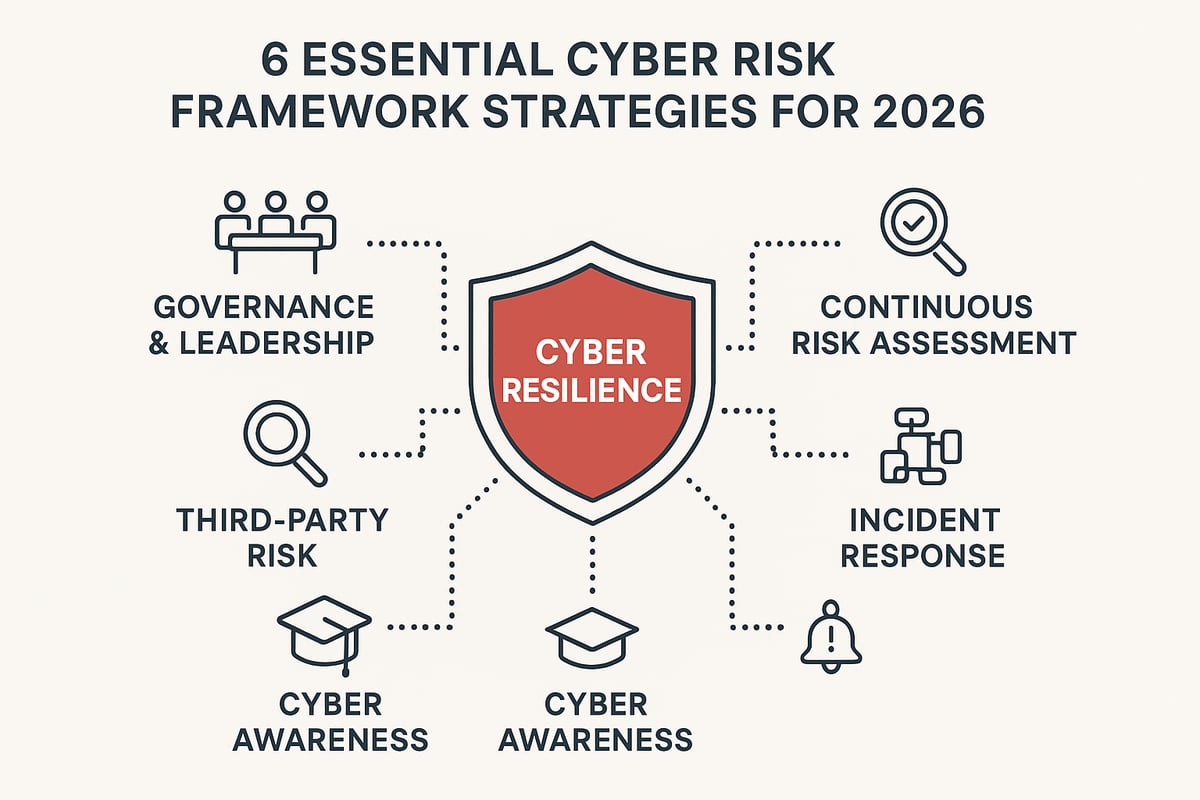
1. Strengthen Governance and Leadership Alignment
Establishing strong governance is the backbone of any successful cyber risk framework. In 2026, cyber risk is front and center in boardrooms everywhere, and executive support is a non-negotiable. Leadership sets the tone for risk management—when the board and C-suite are invested, progress follows. First, clarify roles and responsibilities across IT, security, compliance, and business units. This ensures everyone knows their part in the cyber risk framework and eliminates confusion. Regular board-level oversight, including risk appetite statements and clear reporting, creates accountability and drives investment where it counts. Integrating cyber risk into enterprise risk management (ERM) is essential. This alignment means cyber risk decisions are made in the context of broader business goals. For practical guidance on establishing effective governance, explore these Cybersecurity governance essentials. Remember, successful frameworks are guided from the top. Organizations that prioritize governance often see more consistent compliance and a stronger security culture.2. Implement Continuous Risk Assessment and Monitoring
The days of annual check-the-box assessments are gone. A modern cyber risk framework relies on continuous risk evaluation to keep up with new threats. Automation and AI make it possible to monitor vulnerabilities in real time, so you can spot issues before they become incidents. Maintain a current asset inventory, including shadow IT and third-party systems. This visibility is key for an effective cyber risk framework. Using live threat intelligence feeds helps you stay one step ahead, identifying risks as they emerge. Structured risk assessment processes, like those found in NIST SP 800-30 or ISO 27001, provide a solid foundation. Automated tools can scan your vendor ecosystem for exposures, reducing manual workload and increasing accuracy. Companies that move to continuous risk monitoring experience fewer surprises and respond faster to emerging threats.3. Prioritize Third-Party and Supply Chain Risk Management
With organizations sharing confidential data with hundreds of partners, third-party risk is a top concern. A robust cyber risk framework includes policies for assessing, onboarding, and monitoring vendors throughout their lifecycle. Require suppliers to show evidence of framework adoption, such as ISO 27001 or SOC 2 certifications. Regularly review contracts and conduct third-party risk assessments to ensure compliance. Continuous monitoring for vendor-related incidents should be standard practice in your cyber risk framework. A recent trend is enforcing vendor compliance with frameworks like NIST CSF. This proactive step can reduce your exposure to supply chain attacks and data breaches, keeping your organization safer.4. Enhance Incident Response and Recovery Capabilities
No cyber risk framework is complete without a tested incident response plan. In 2026, threats evolve quickly, so your response playbook must be current and rehearsed. Align your plans with trusted frameworks, such as NIST or ISO, for best results. Document business continuity and disaster recovery processes. Integrate cyber insurance and consider risk transfer strategies as part of your cyber risk framework. Use tabletop exercises to simulate real-world attacks, ensuring your team is ready to detect, contain, and communicate during a crisis. Organizations that regularly test their response protocols can minimize downtime and financial impact. A well-prepared team is your best defense against the unexpected.5. Foster a Culture of Cyber Risk Awareness and Training
A successful cyber risk framework is not just about technology—it is about people. Security awareness must reach every corner of the organization, from the front desk to the boardroom. Tailor training programs to specific roles and risks. Update content regularly to reflect new threats and regulatory changes. Phishing simulations and real-world scenarios help reinforce learning, making security second nature. Breaking down silos and encouraging shared ownership of cyber risk empowers everyone to play a part. When employees understand their role in the cyber risk framework, human error decreases and overall security improves.6. Optimize Framework Integration and Continuous Improvement
Managing multiple frameworks can be overwhelming. The key is to map overlapping requirements and use maturity models to streamline your cyber risk framework adoption. This approach reduces duplication and simplifies compliance. Leverage metrics and KPIs to measure effectiveness and drive ongoing improvement. Encourage collaboration across departments for successful framework implementation. Stay updated on revisions to standards like NIST CSF 2.0 and ISO. Many organizations use integrated GRC platforms to unify framework management, giving leaders a clear view of progress. A cyber risk framework should never be static—continuous improvement ensures your defenses evolve with the threat landscape.If you’d like to connect, collaborate, or join my free community CISO LaunchPad
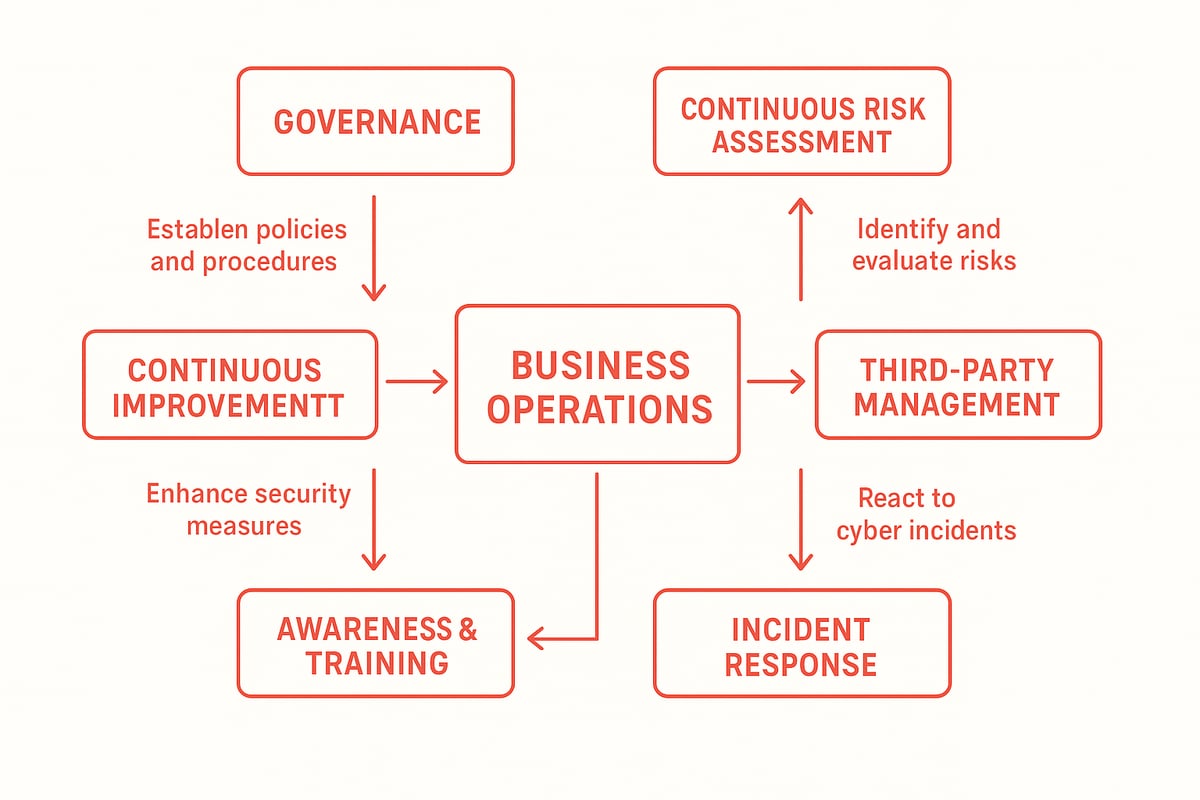
Integrating Framework Strategies into Business Operations
Turning a cyber risk framework from theory into practice can feel daunting, but it is absolutely achievable. Let us explore how to weave these strategies into the fabric of your day-to-day business operations, creating a culture of resilience and readiness for whatever comes next.