



Did you know that cyberattacks are expected to double by 2026, putting organizations and their leaders at risk like never before? The rapid pace of change in the cybersecurity world means today’s CISOs face both unprecedented threats and remarkable opportunities.
This guide is your essential roadmap for mastering the skills needed to thrive in tomorrow’s landscape. Whether you’re an aspiring leader or an experienced professional, our CISO training insights will help you future-proof your career.
Inside, you’ll discover how the CISO role is evolving, the technical and strategic skills you need, leadership tips, compliance essentials, emerging trends, and practical steps to build your training path. Let’s get started and unlock your full potential.
The Evolving Role of the CISO in 2026
Today’s CISO faces a cybersecurity landscape that is almost unrecognizable from just a few years ago. The rapid pace of change means that ciso training must evolve just as quickly. As organizations embrace digital transformation, CISOs are expected to do much more than defend networks—they are now central to business strategy, resilience, and innovation.
Shifting Threat Landscape and Business Expectations
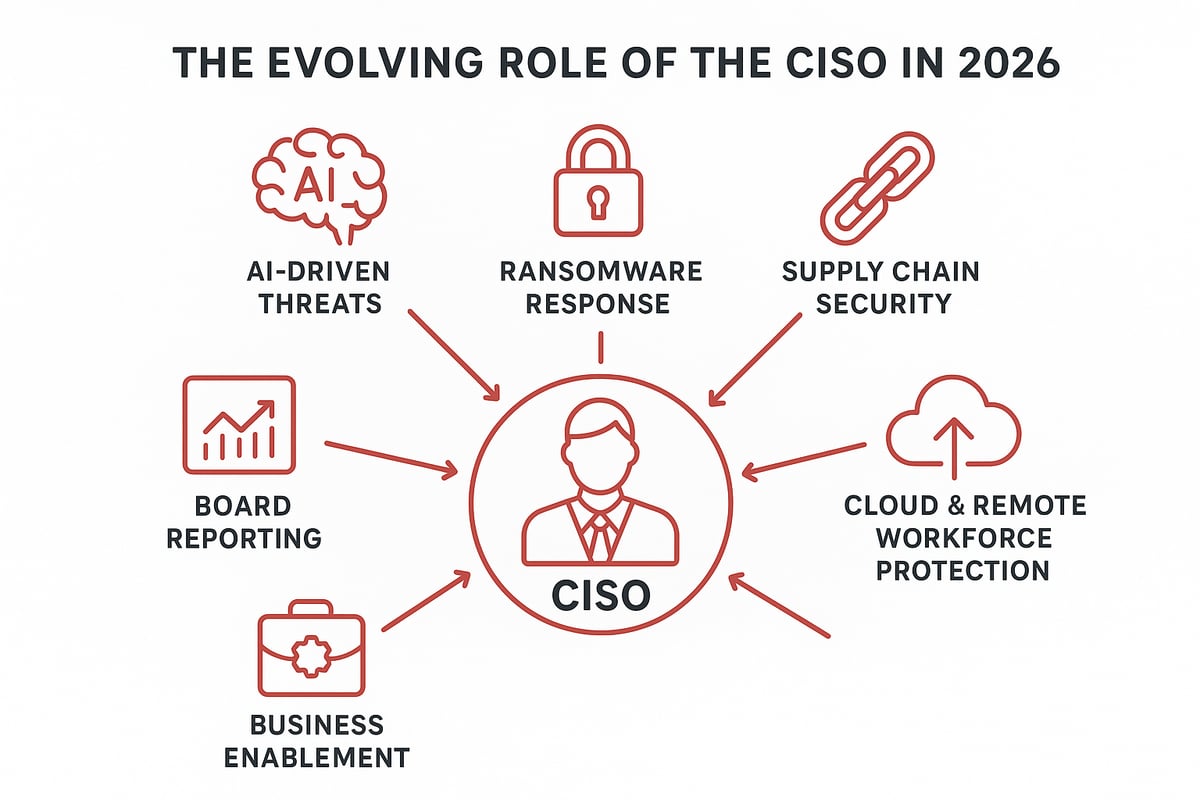
In 2026, the threat landscape is dominated by advanced ransomware, AI-powered attacks, and increasingly complex supply chain vulnerabilities. According to recent industry research, the number of significant security incidents continues to climb, with attackers leveraging automation and machine learning to bypass traditional defenses.
This escalation means that CISO training must now include not only technical skills, but also a deep understanding of emerging threats and how to anticipate them.
CISOs are no longer seen as mere gatekeepers. Boards and executive teams expect them to be business enablers, helping organizations seize digital opportunities while managing risk. The integration of cybersecurity into digital transformation initiatives is now standard practice.
For example, leading organizations are embedding CISOs into innovation teams, ensuring that security is considered from the outset of every project.
CISOs are also responsible for overseeing third-party risk management, cloud security, and the protection of remote and hybrid workforces. The rise of cloud-based services has expanded the attack surface, requiring CISOs to adapt rapidly.
As a result, many CISOs now report directly to the board or CEO, reflecting their critical role in business continuity and resilience.
Industry reports highlight that more than 60% of boards now view cybersecurity as a top strategic priority. This shift is driving demand for advanced CISO training that prepares leaders to communicate effectively with stakeholders, manage complex supply chains, and respond to evolving threats.
For a deeper dive into how attackers are getting smarter and what this means for CISO priorities, see Cybersecurity Trends for 2026: Hackers Are Getting Smarter.
Expanding Leadership and Influence
The role of the CISO has transformed from technical expert to strategic leader. Successful CISO training now emphasizes not just technical mastery, but also the ability to influence across departments and lead enterprise risk management efforts. Collaboration with IT, legal, HR, and business units is crucial for building a holistic security program.
CISOs are increasingly tasked with leading crisis response teams during major incidents. Their ability to remain calm, make rapid decisions, and communicate clearly is vital for minimizing business impact. Some organizations have even combined the CISO role with that of CTO or COO, recognizing the value of having a leader who understands both technology and business operations.
Continuous learning and adaptability are essential. The most effective CISOs regularly update their skills, stay current with regulatory changes, and foster a culture of security awareness throughout their organizations. Investing in ongoing CISO training ensures leaders are equipped to handle whatever challenges the future may bring.
As the expectations placed on CISOs continue to grow, those who embrace a strategic mindset and prioritize leadership development will be best positioned for success. The evolving role demands flexibility, vision, and a commitment to lifelong learning.
Core Technical Skills Every CISO Needs
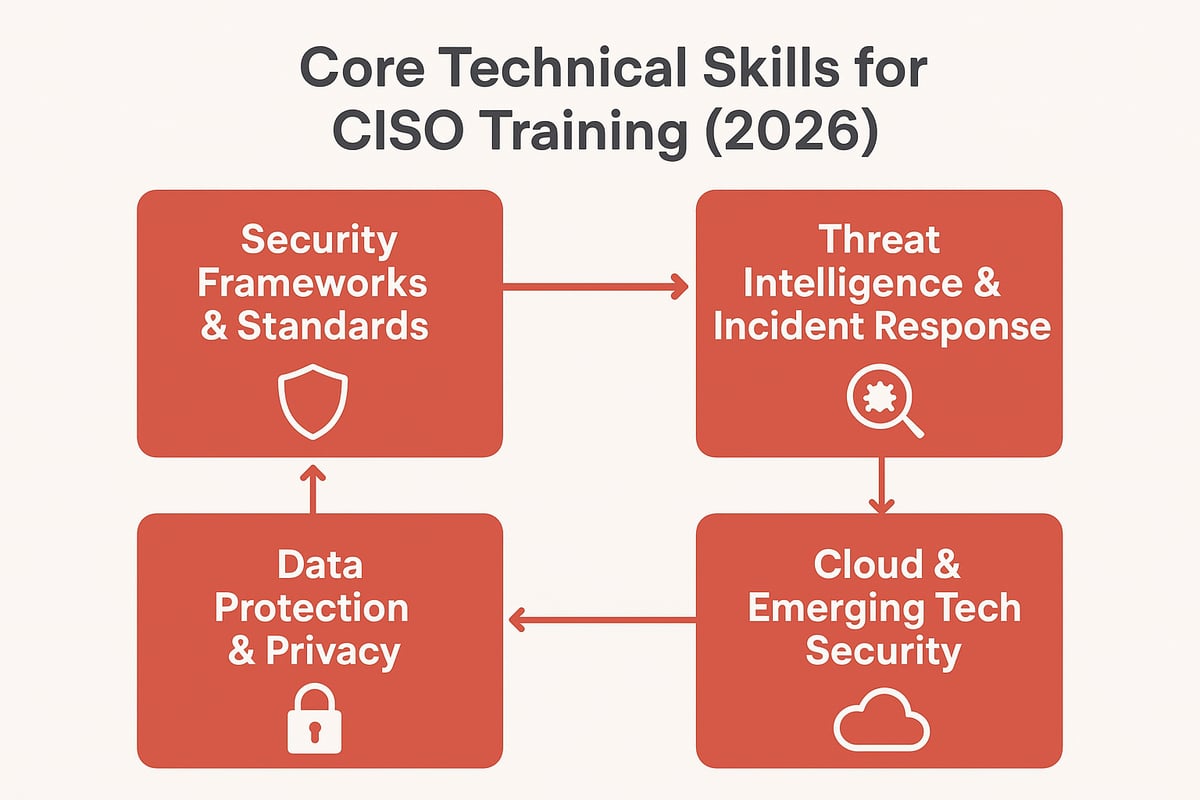
The demands on today’s CISOs are skyrocketing. To succeed, it’s essential to master a toolkit of technical skills that go far beyond the basics. CISO training in 2026 requires us to blend expertise in frameworks, threat intelligence, cloud, and privacy into a unified strategy. Let’s explore the core technical capabilities every CISO should prioritize to ensure ongoing success.
Mastery of Security Frameworks and Standards
Practical CISO training begins with a deep understanding of industry frameworks. Standards like ISO/IEC 27001 and the NIST Cybersecurity Framework are foundational, guiding risk management and security controls. As regulations evolve, new frameworks such as DORA and NIS2 are reshaping how we approach global compliance.
Aligning security programs with these standards is not just about passing audits. It’s a blueprint for resilience and trust.
For example, organizations implementing ISO/IEC 27001 often see improved incident response and stakeholder confidence. To dive deeper into which frameworks are most impactful, see this review of the best cybersecurity frameworks.
CISO training also emphasizes the importance of tailoring frameworks to fit the unique business context. This adaptability ensures controls remain both effective and practical as threats and regulations change.
Advanced Threat Intelligence and Incident Response
Modern threats demand that ciso training covers sophisticated threat intelligence and response tactics. CISOs must be adept at using threat intelligence platforms, gathering actionable insights, and leading proactive threat hunting across the organization.
Best practices include running regular tabletop exercises and conducting thorough post-incident reviews. Speed matters—reports show that organizations with robust incident response plans can reduce breach impact by more than 50%. Embedding these skills in CISO training ensures teams are ready to detect and contain threats quickly.
Incident response is not a one-time event. It is a cycle of continuous improvement, learning from every incident to strengthen defenses and empower teams.
Cloud Security and Emerging Technologies
As organizations move to the cloud, ciso training must focus on cloud security architecture and shared responsibility models. Understanding how to secure SaaS, IaaS, and hybrid environments is now non-negotiable.
CISOs are also tasked with overseeing the security of AI, IoT, and operational technology (OT). This requires adapting traditional controls to new risks. For example, securing IoT devices requires managing authentication, patching, and network segmentation in ways that differ from those used in classic IT.
CISO training in 2026 prepares leaders to build and enforce cloud security policies that protect data, support innovation, and keep pace with rapid technology shifts.
Data Protection and Privacy Management
Data is the lifeblood of every organization. That’s why ciso training places a strong focus on data classification, encryption, and privacy-by-design principles. Regulatory landscapes like GDPR and ISO/IEC 27701 are evolving, making compliance more complex and essential.
CISOs must ensure data is protected throughout its lifecycle. This means developing clear policies, using robust encryption, and integrating privacy into every project from the start. Examples of strong CISO training include hands-on exercises in breach prevention and response, ensuring leaders can act decisively when incidents occur.
By prioritizing privacy and data protection, CISOs build trust with customers and regulators alike, safeguarding both reputation and business continuity.
Strategic and Business Acumen for Modern CISOs
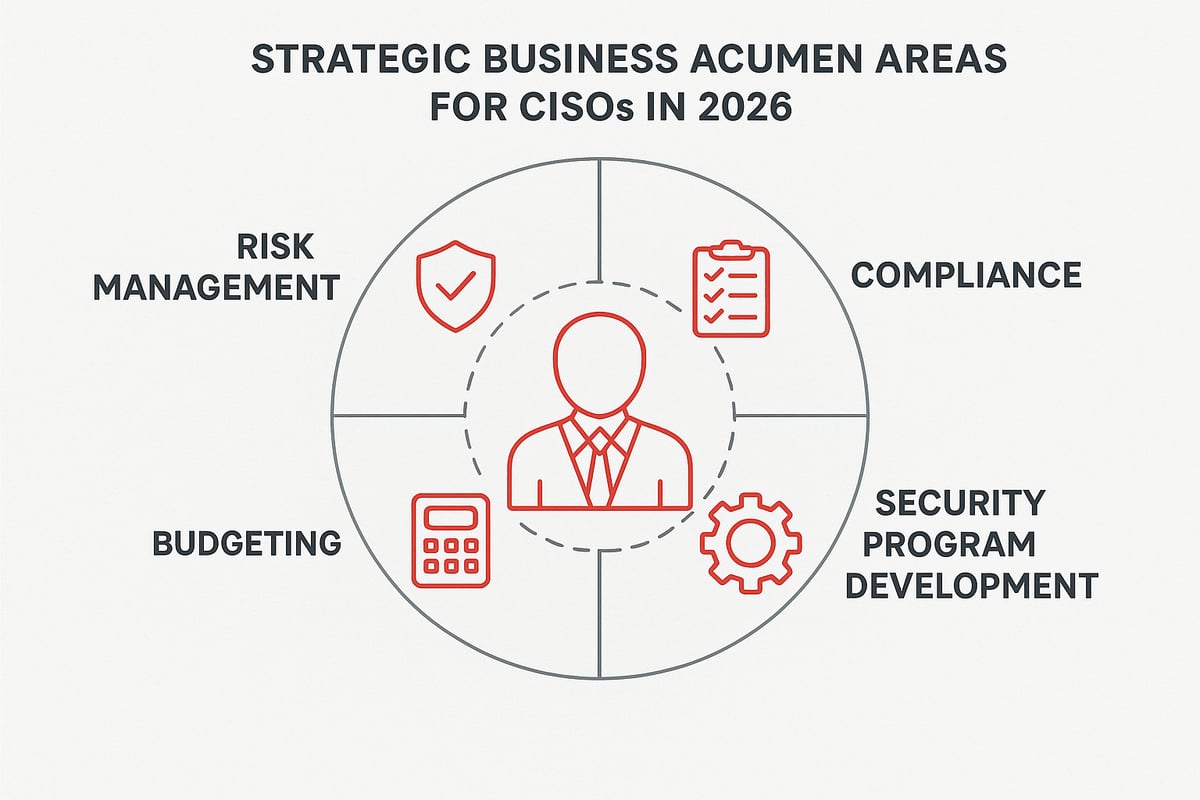
In today’s cybersecurity world, technical skills are just one piece of the puzzle. Modern CISOs must master strategic and business acumen to lead and protect their organizations truly. This section explores how CISO training goes beyond firewalls and encryption, empowering security leaders to quantify risk, shape governance, drive business value, and make smart investments for the future.
Risk Management and Quantification
Risk management is the heartbeat of effective CISO training. Today’s CISOs are expected to use advanced frameworks like FAIR and ISO 31000, moving from gut feeling to data-driven analysis. This means not only identifying threats, but also translating them into business terms that resonate with executives.
Quantifying cyber risk allows CISOs to prioritize security investments and clearly communicate exposure to the board. For example, using FAIR can assign dollar values to potential breaches, making decisions more objective. Many organizations now require CISOs to lead risk assessments and align them with business goals.
For those looking to deepen their skills, resources such as cyber risk assessment tools provide practical ways to integrate risk quantification into daily practice. Strong CISO training builds confidence in both identifying and explaining risk in a language everyone understands.
Governance, Compliance, and Policy Development
A modern CISO’s influence is felt across the entire organization, especially in shaping governance and policy. CISO training emphasizes designing governance structures that support both compliance and innovation. This means understanding sector-specific regulations like SOX, HIPAA, and PCI DSS, and adapting policies as laws evolve.
Successful CISOs don’t work in silos. They collaborate with legal, HR, and business leaders to ensure that security policies are practical and enforceable. By developing clear policies and staying ahead of regulatory changes, CISOs help their companies avoid costly penalties and build trust with customers.
Keeping up with compliance frameworks for 2026 is a journey, not a destination. Ongoing CISO training ensures leaders can navigate new rules and proactively update policies, creating a culture where security and compliance go hand in hand.
Security Program Development and Metrics
Developing a robust security program is a cornerstone of effective CISO training. Modern CISOs must design, implement, and continuously improve their programs to keep pace with evolving threats. This includes setting clear goals, documenting processes, and ensuring alignment with business objectives.
Measuring success means tracking key performance indicators (KPIs), such as incident response times, compliance rates, or employee training completion. Regularly reviewing these metrics helps CISOs identify gaps and celebrate progress. Real-world examples show that organizations with mature security programs are better prepared for emerging risks.
A strong focus on metrics transforms security from a cost center into a business enabler. Through targeted CISO training, leaders learn how to present results to stakeholders, highlight ROI, and support ongoing investment in security initiatives.
Budgeting, Resource Allocation, and Vendor Management
Securing the proper budget is a skill that every CISO needs. CISO training teaches leaders how to build compelling business cases for security spend, demonstrating value in terms the CFO understands. This includes forecasting needs, prioritizing investments, and showing how each dollar reduces risk.
Resource allocation is not just about money, but also about people and technology. Effective CISOs use data-driven approaches to allocate resources where they matter most. Vendor management is another key area, involving careful evaluation of partners and contract negotiation to maximize value.
As organizations grow, CISO training helps CISOs balance immediate needs with long-term strategy. By mastering budgeting and vendor management, CISOs position themselves as strategic partners who drive business resilience and innovation.
Leadership, Communication, and Influence
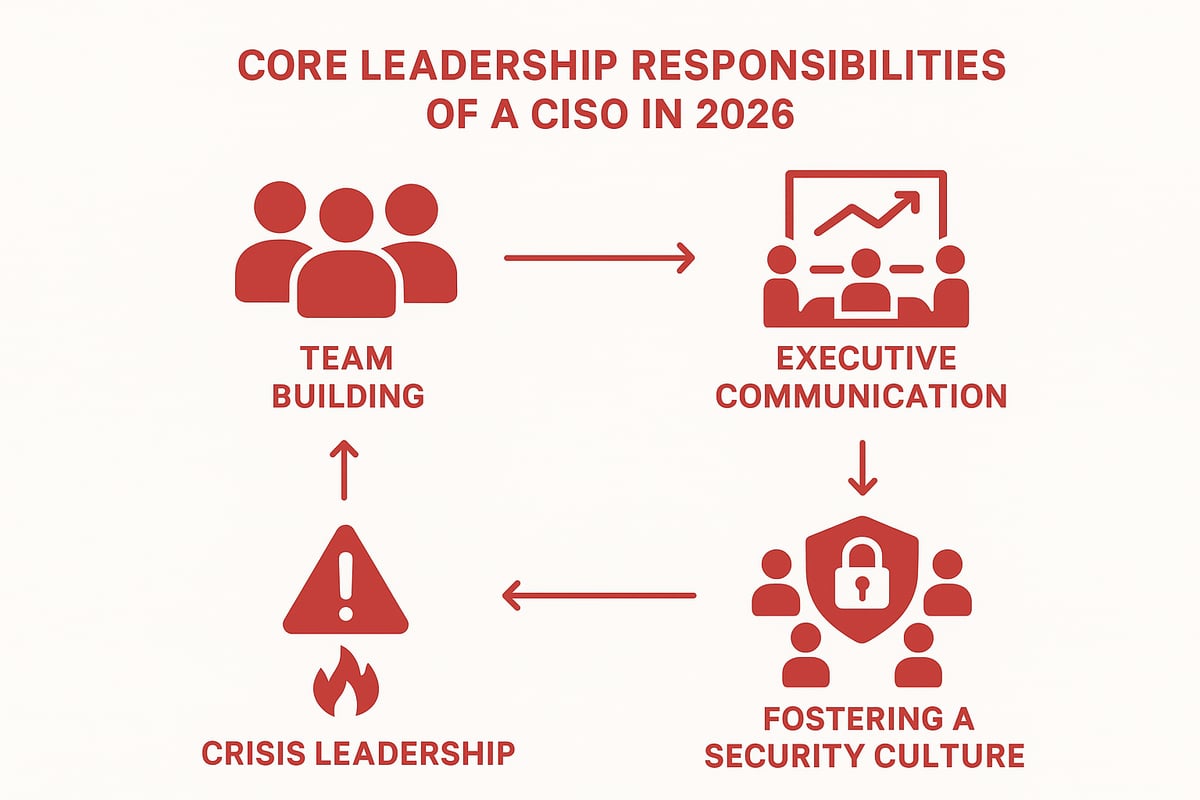
Stepping into the role of a modern CISO means far more than technical expertise. Leadership, communication, and influence are at the heart of effective CISO training. Whether you’re aspiring or already established, these skills will define your ability to protect, empower, and inspire your organization.
Building and Leading High-Performing Security Teams
Successful CISO training prepares you to build and lead diverse, resilient security teams. Recruitment is about finding talent with both technical and soft skills. Retention and upskilling require a supportive environment where growth is encouraged and recognized.
Mentoring is essential. Pairing new hires with experienced staff helps knowledge transfer and builds trust. Succession planning ensures your team can handle transitions smoothly.
Consider team structures like SOC (Security Operations Center), IR (Incident Response), GRC (Governance, Risk, and Compliance), and DevSecOps. Each plays a unique role in your security ecosystem. For a deeper dive into these leadership essentials, explore Security leadership best practices.
Ultimately, CISO training focused on leadership empowers you to build agile, motivated teams ready for new challenges.
Executive and Board Communication
Translating complex cyber risks into business language is a cornerstone of practical CISO training. Executives and board members need clear, concise updates, not just technical jargon.
Use visual dashboards and simple metrics to illustrate risk posture and trends. Practice storytelling to make your message relatable. Regular board presentations can build trust and ensure cybersecurity remains a top priority.
Statistics show that board engagement with cybersecurity issues has risen sharply in recent years. When you speak their language and connect risk to business outcomes, you become a strategic partner, not just an IT advisor.
With strong communication skills, CISO training enables you to influence decision-making at the highest levels and secure buy-in for your initiatives.
Fostering a Security Culture Across the Organization
A security-first culture doesn’t happen by accident. It’s the result of intentional ciso training and ongoing engagement across all departments.
Methods like interactive training sessions, regular phishing simulations, and gamified learning help make security awareness stick. Encourage open discussions about recent threats and lessons learned.
Celebrate small wins, such as a team catching a phishing attempt or reporting a vulnerability. These positive reinforcements help embed accountability at every level.
Real-world examples show that organizations with strong security cultures experience fewer incidents and recover faster. Make security everyone’s responsibility, not just the IT team’s.
Crisis Leadership and Decision-Making Under Pressure
When a major incident strikes, CISO training is truly put to the test. The CISO must lead with calm, decisive action while keeping all stakeholders informed.
Rapid decision-making frameworks, like predefined playbooks or incident response checklists, are invaluable. Communication during a crisis should be clear, timely, and transparent.
Reviewing past crisis management case studies can provide practical insights. Learning from what worked and what didn’t helps you build confidence for future challenges.
The best ciso training prepares you to lead under pressure, turning moments of crisis into opportunities for organizational growth and resilience.
If you’d like to connect, collaborate, or join my free community CISO LaunchPad
Compliance, Privacy, and Regulatory Mastery for 2026
Navigating the ever-changing regulatory landscape is now a core pillar of CISO training. New frameworks and updates, such as DORA, NIS2, CMMC, and evolving GDPR rules, have heightened the stakes for security leaders. Today’s CISOs must ensure their organizations are always audit-ready, with processes that adapt quickly to new compliance demands. Industry reports highlight that compliance is now a board-level concern and that the convergence of OT and IT security is accelerating regulatory scrutiny across sectors. For a deeper dive into these trends, see OT Cybersecurity 2026: Six Data-Driven Trends. Mastery of ISO/IEC 27001, 27701, and similar standards is no longer optional, but essential for practical CISO training.
Navigating a Complex Regulatory Environment
CISOs face a patchwork of global rules, each with unique requirements. DORA and NIS2 introduce new layers of protection for financial and critical infrastructure firms, while CMMC imposes stricter controls on defense supply chains. CISO training now includes staying ahead of these changes and embedding compliance into every business process.
Proactive steps include:
- Regular regulatory horizon scanning
- Developing audit-ready documentation
- Building relationships with regulators and auditors
Modern ciso training programs teach leaders to interpret frameworks and translate requirements into actionable, organization-wide policies.
Data Sovereignty, Privacy, and Cross-Border Challenges
Managing data across borders is increasingly complex. Laws on data residency and transfer, such as GDPR updates and region-specific mandates, shape how organizations store and process information. CISO training equips leaders to develop strategies for data localization and cross-border compliance.
Key considerations:
- Identifying where sensitive data resides
- Mapping data flows across jurisdictions
- Assessing third-party vendor compliance
Multinational companies must coordinate compliance efforts, balancing business agility with strict privacy requirements.
Building a Privacy-First Security Program
A privacy-first mindset is now central to effective security. CISO training emphasizes privacy-by-design, data minimization, and strong user consent management. Embedding privacy into frameworks like ISO/IEC 27701 is vital for risk reduction and regulatory alignment.
To build a privacy-first program:
- Integrate privacy impact assessments into new projects
- Encrypt data at rest and in transit
- Minimize data collection to only what’s necessary
This approach not only reduces breach risks but also builds trust with customers and regulators.
Collaboration with Legal, HR, and Business Units
True compliance is a team effort. CISO training now focuses on cross-functional partnerships, bringing together legal, HR, and business leaders to create a culture of accountability. CISOs lead training initiatives, enforce policies, and coordinate breach notification processes.
Collaboration ensures:
- Consistent interpretation of regulations
- Effective policy rollout and enforcement
- Timely response to incidents and audits
By working together, organizations can strengthen compliance and resilience in the face of evolving threats.
Emerging Trends and Future-Focused Skills for CISOs
Staying ahead in cybersecurity means embracing the trends shaping tomorrow’s threats and opportunities. For leaders committed to CISO training, understanding these emerging forces is vital to building resilient, future-ready organizations. Let’s explore the most critical shifts every CISO should master.
Artificial Intelligence and Automation in Cybersecurity
Artificial intelligence is transforming cybersecurity at breakneck speed. Automated threat detection, machine learning-driven SOC operations, and AI-powered incident response are now essential topics in CISO training. These technologies help security teams spot attacks faster, reduce false positives, and streamline complex investigations.
CISOs must understand not only how to deploy these tools but also how to evaluate their effectiveness, manage bias, and adapt as adversaries leverage AI.
According to Cybersecurity Trends in 2026: AI Defense to Digital Trust, organizations investing in AI-driven defense see significant improvements in detection and response capabilities. Mastering these skills ensures CISOs can outpace evolving threats and lead their teams with confidence.
Zero Trust and Identity-Centric Security Models
Zero trust is more than a buzzword, it’s a fundamental shift in how we protect digital assets. For CISO training in 2026, adopting zero trust means treating every user, device, and application as untrusted by default.
Identity-first security models put strong authentication, continuous monitoring, and least-privilege access at the core of defense.
CISOs are now leading initiatives to roll out zero-trust architectures across hybrid environments. Real-world case studies show that organizations implementing these models experience fewer breaches and stronger regulatory compliance. As attackers target identities and lateral movement, mastering zero trust becomes a cornerstone of every CISO’s skill set.
Digital Transformation, Cloud, and Remote Workforces
The rapid move to cloud services and remote work has rewritten the playbook for CISO training. Modern CISOs must design security strategies that protect data, applications, and users wherever they are. This includes mastering shared responsibility models, securing SaaS and IaaS platforms, and building policies for hybrid teams.
Navigating these challenges requires up-to-date knowledge of cloud threats and best practices. The Cloud security strategy and policy guide offers actionable insights for CISOs managing cloud environments. As digital ecosystems grow, CISOs who excel in these areas will drive business innovation while keeping risks in check.
Continuous Learning and Professional Development
Change is constant, so continuous learning is non-negotiable in CISO training. The most effective CISOs pursue new certifications, attend industry conferences, and engage in hands-on labs to sharpen their skills. Peer networks and mentoring relationships help leaders stay informed and resilient.
Emerging roles, such as CISO-as-a-Service and security program architects, reward those who invest in lifelong learning. By setting clear development goals and tracking progress, CISOs can adapt to new threats and technologies, ensuring their organizations remain secure and competitive.
Building Your CISO Training Roadmap: Steps to 2026 Success
Are you ready to elevate your CISO training and prepare for the challenges of 2026? Building a personalized roadmap is not just about checking boxes, but about charting a path that aligns with your career goals and the evolving threat landscape. Let’s break the journey into clear, actionable steps so you can move forward with confidence.
Assessing Current Skills and Identifying Gaps
Every successful CISO training journey begins with honest self-assessment. Take stock of your current technical, strategic, and leadership skills. Use industry-standard frameworks such as NIST NICE or the CIS Critical Security Controls to benchmark your capabilities.
Consider:
- Reviewing recent job descriptions for CISOs
- Mapping your experience to required competencies
- Seeking feedback from mentors or peers
Identifying gaps early helps you set targeted learning goals, making your CISO training more focused and effective.
Selecting the Right Training and Certification Paths
With your skill gaps in mind, it’s time to explore CISO training programs and certifications that fit your needs. Leading options include PECB CISO, EC-Council’s CCISO, and ISO/IEC 27001 Lead Implementer. Each offers a unique blend of technical depth and leadership focus.
When choosing, compare course content, hands-on labs, and industry recognition. For a deeper dive into the most valued skills and a roadmap to cybersecurity leadership, check out Five Essential Skills for CISOs.
Remember, the proper CISO training will boost your credibility and open doors to new opportunities.
Gaining Real-World Experience and Mentorship
CISO training is most effective when paired with practical experience. Participate in simulations, lead security projects, or volunteer for crisis response exercises. These hands-on opportunities help you build confidence and bridge the gap between theory and practice.
Seek out mentors within your organization or through professional communities. Peer networks, such as CISO forums or online groups, offer invaluable support and real-world insights.
Blending CISO training with mentorship accelerates your professional growth and keeps you connected to industry best practices.
Creating a Personalized Development Plan
Now that you’ve gathered resources and support, map out a development plan tailored to your goals. Start by setting clear learning objectives, then outline a timeline for each milestone.
Steps to consider:
- Identify short-term and long-term targets
- Schedule regular check-ins to track progress
- Adjust goals as your priorities evolve
A structured plan ensures your CISO training stays on track and adapts to your changing needs.
Staying Ahead: Monitoring Trends and Adapting
The cybersecurity landscape never stands still, and neither should your CISO training. Make it a habit to monitor industry trends, regulatory changes, and emerging threats.
Stay engaged by:
- Attending webinars and conferences
- Subscribing to cybersecurity news sources
- Joining professional groups for ongoing learning
Being proactive helps you anticipate changes and ensures your skills remain relevant for 2026 and beyond.
As you look ahead to the challenges and opportunities facing CISOs in 2026, remember—you don’t have to navigate this evolving landscape alone. We’ve covered a lot here, from building essential skills to leading with confidence and clarity.
If you’re ready to connect with peers, share real-world experiences, and keep growing together, I invite you to join us in the Join CISO Launchpad.
It’s a supportive space for current and aspiring CISOs who want practical advice, encouragement, and a like-minded community. Let’s continue building resilient organizations—together.


