



Recent high-profile cyber attacks have shown just how vulnerable our digital world has become. In 2026, the threats are smarter, faster, and more complex than ever before.
Understanding cyber security words is no longer just for IT professionals. It is now essential knowledge for everyone, from business leaders to everyday internet users.
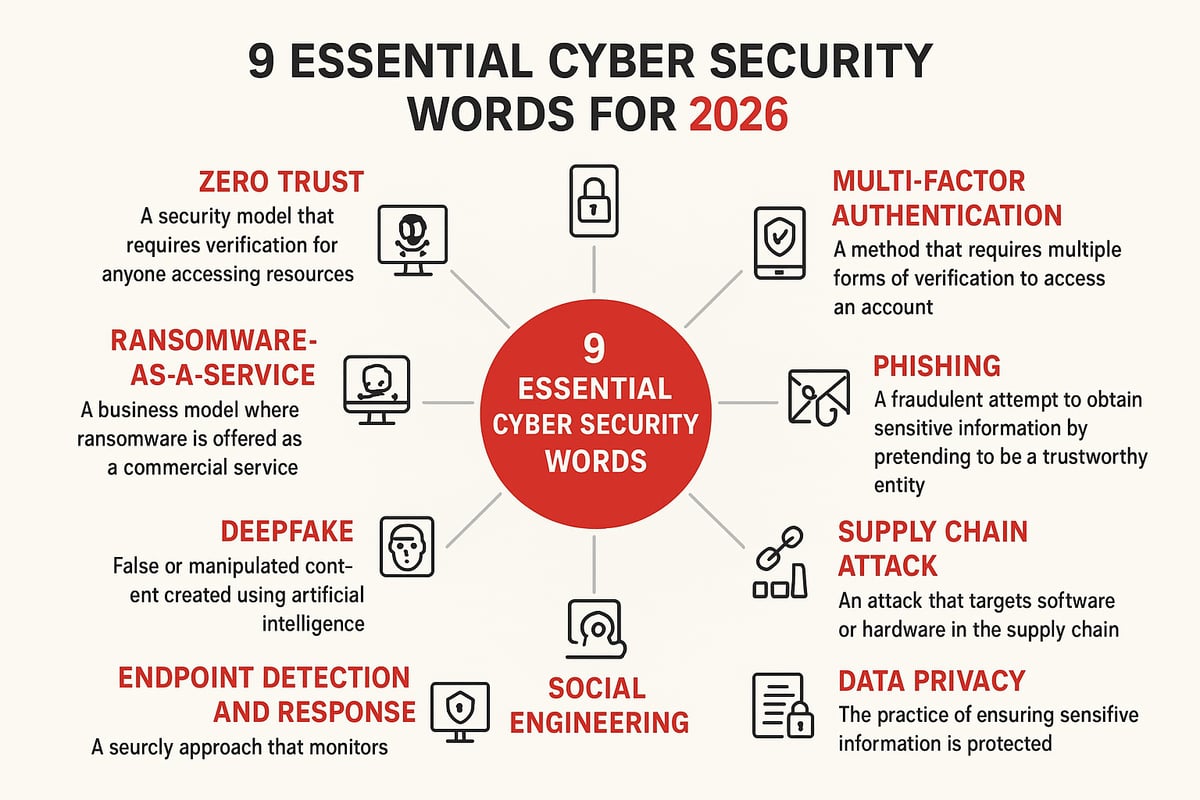
This article breaks down the 9 most important cyber security words shaping today’s digital landscape. By learning these terms, you will be better prepared to protect yourself and your organization from evolving threats.
Let’s explore these words together and take the first step in building a safer, more informed digital future.
The Rising Importance of Cyber Security Literacy in 2026
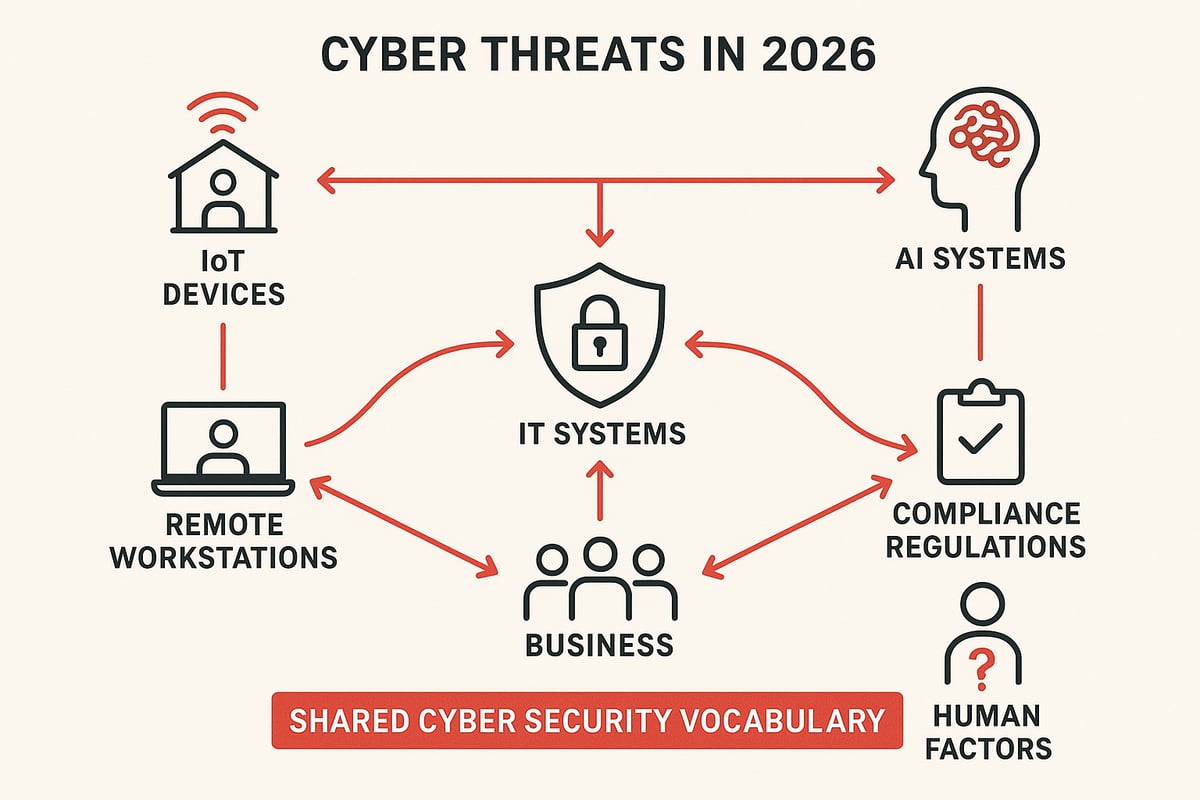
In 2026, the digital landscape is more treacherous than ever. Cyber attacks are not just increasing in number, but also in sophistication, targeting every aspect of our connected world. From smart homes and wearable tech to the systems that power global enterprises, the stakes have never been higher.
This rapid expansion of digital transformation, driven by the Internet of Things, artificial intelligence, and widespread remote work, has created countless new entry points for attackers. Every device, application, and online account is a potential doorway into sensitive data or critical infrastructure.
No one is immune. Individuals, small businesses, and multinational corporations all face mounting cyber risks. Even a single weak link—a forgotten password, an untrained employee, or an unpatched device—can lead to devastating consequences. Recent statistics reveal that the average cost of a data breach continues to climb, with ransomware payouts and business disruptions reaching record highs.
Regulatory bodies have responded with stricter compliance standards and evolving data privacy laws. These new rules demand that organizations not only protect information, but also demonstrate a clear understanding of security protocols and terminology. For many, keeping up with these changes can feel overwhelming.
A key part of meeting these challenges is developing a shared language. Mastering cyber security words helps bridge the gap between technical experts and business leaders, making it easier to communicate risks and solutions. Without a common vocabulary, critical details can be lost in translation, slowing incident response and increasing exposure.
Consider the impact of human error, which remains one of the leading causes of security breaches. Many of these mistakes could be avoided if everyone understood basic cyber security words and concepts. For example, recognizing a phishing email or understanding the importance of multi-factor authentication can make a world of difference.
Having a solid grasp of cyber security words empowers us to ask better questions, make informed decisions, and build stronger defenses. It also enables cross-functional teams to collaborate more effectively during an incident, reducing confusion and response times.
Learning these terms is not just for IT professionals. In today’s world, everyone benefits from a foundational knowledge of cyber security words. If you’re unsure where to start, resources like Learn cybersecurity fundamentals can help you build confidence and stay current with essential vocabulary.
As threats continue to evolve and technology advances, staying fluent in cyber security words is no longer optional—it is a necessity for safety, compliance, and peace of mind.
9 Essential Cyber Security Words Everyone Should Know in 2026
The digital world is moving fast, and the language we use to talk about it is evolving just as quickly. In 2026, knowing the right cyber security words is more than a technical skill, it is a must-have for staying safe online. Whether you are a business leader, a tech enthusiast, or just someone who wants to protect their personal data, understanding these nine essential cyber security words empowers you to make smarter decisions and respond confidently to new threats.
Below, we break down the most important cyber security words shaping our digital future. Let us dive in and build a vocabulary that keeps us all safer.
1. [Zero Trust]
Zero Trust is one of the most important cyber security words in 2026. It is a security framework built on the idea that no user, device, or application should be trusted by default, even if they are inside your network. The core principle is simple: “Never trust, always verify.”
This approach is especially powerful in hybrid and remote work settings. With more devices connecting from different locations, Zero Trust helps ensure that only the right people with the right permissions can access sensitive data.
Organizations are rapidly adopting Zero Trust Network Access (ZTNA) solutions. These tools constantly check user identities, device health, and context before granting access. The benefits are clear:
- Reduced attack surface
- Improved access control
- Minimized risk of lateral movement by attackers
Statistics show that the Zero Trust market is projected to surge by 2026, with Zero Trust adoption trends revealing that 81% of organizations plan to implement this model. This shift is crucial as attackers become more sophisticated.
However, implementing Zero Trust is not without challenges. It requires:
- Upgrading legacy systems
- Training staff on new protocols
- Ongoing monitoring and adjustments
Understanding Zero Trust as one of your core cyber security words enables you to better protect your organization and personal data in a connected world.
2. [Ransomware-as-a-Service (RaaS)]
Ransomware-as-a-Service, or RaaS, is transforming the cyber crime landscape. This term describes a subscription-based model where cyber criminals rent out ransomware tools to others, making it easier for anyone to launch attacks—even without technical expertise.
RaaS platforms operate much like legitimate businesses. They offer customer support, payment processing, and regular updates. Notable examples have caused major disruptions, targeting everything from hospitals to city governments.
The impact is massive. In 2025–2026, ransomware incidents have reached record highs, with average payouts soaring. This trend puts organizations of every size at risk.
Why is RaaS one of the most critical cyber security words? Because it democratizes cyber crime, allowing more attackers to participate and increasing the volume of threats. According to Ransomware-as-a-Service impact, this model is driving a surge in ransomware attacks worldwide.
To defend against RaaS:
- Regularly back up data
- Train employees to spot suspicious behavior
- Prepare incident response plans
Legal and ethical issues arise, too, as law enforcement struggles to keep up with RaaS operators across borders. Recognizing RaaS as a key cyber security word helps you stay alert to one of today’s fastest-growing threats.
3. [Multi-Factor Authentication (MFA)]
Multi-Factor Authentication, or MFA, is another essential entry among cyber security words. MFA requires users to provide at least two forms of verification before granting access to an account or system.
Common types of MFA include:
- SMS codes
- Authenticator apps
- Biometrics (like fingerprints or face scans)
- Hardware tokens
MFA is highly effective. Microsoft data shows it blocks 99% of automated attacks. This makes MFA a must-have for both businesses and individuals.
However, attackers are adapting. MFA fatigue attacks, where users are bombarded with repeated authentication requests, can trick people into approving malicious access. New bypass techniques are emerging as well.
A real-world case study: In 2025, a major financial institution prevented a breach by enforcing MFA for all employees, stopping attackers even after passwords were compromised.
To get the most from MFA:
- Choose strong, unique authentication methods
- Educate users on phishing and social engineering tactics
- Regularly review and update MFA settings
By making MFA part of your everyday cyber security words, you help secure accounts against evolving threats.
4. [Phishing]
Phishing is a classic term that remains at the heart of cyber security words in 2026. It refers to deceptive attempts to steal sensitive information, often by impersonating trusted contacts or organizations.
There are many forms of phishing:
- Spear phishing targets specific individuals
- Whaling goes after high-profile executives
- Smishing uses SMS messages
- Vishing relies on voice calls
High-profile phishing campaigns have targeted everyone from CEOs to healthcare workers. According to the 2025 Verizon DBIR, phishing is the leading cause of data breaches.
Attackers use clever social engineering, creating emails and messages that look genuine. AI tools now help them craft even more convincing content, making it harder to spot fake messages.
Prevention is key. Effective strategies include:
- Security awareness training
- Advanced email filtering
- Easy-to-use reporting tools
Phishing simulations also help organizations build resilience. By understanding phishing as one of your vital cyber security words, you become less likely to fall for these tricks.
5. [Deepfake]
Deepfake is a cutting-edge addition to the list of cyber security words. Deepfakes are synthetic media created with AI, capable of imitating voices, faces, and events with stunning accuracy.
Cyber criminals use deepfakes for:
- Fraud, such as fake CEO video calls
- Misinformation and disinformation campaigns
- Business email compromise with altered audio or video
In 2025–2026, several high-profile incidents have made headlines, including a deepfake video used to authorize a fraudulent wire transfer.
Detecting deepfakes is challenging. New tools and countermeasures are emerging, but the technology keeps advancing. According to Deepfake-related scams growth, deepfake scams are growing rapidly, creating new risks for organizations and individuals.
Why is this one of the must-know cyber security words? Deepfakes threaten trust in all digital communications. Legal frameworks are racing to catch up, and new regulations are being discussed worldwide.
To protect yourself:
- Be cautious with unexpected audio or video requests
- Use verification methods before acting on sensitive information
- Report suspected deepfakes to authorities
Learning to recognize deepfakes is crucial as these cyber security words grow in importance.
6. [Supply Chain Attack]
Supply Chain Attack is a term you need to know among cyber security words for 2026. It describes attacks that target third-party vendors, software suppliers, or service providers to compromise a larger organization.
Famous examples include:
- The SolarWinds breach, which impacted thousands of companies
- The Kaseya ransomware attack, affecting managed service providers worldwide
Modern supply chains are complex, often involving dozens or hundreds of partners. A single weak link can expose sensitive data or disrupt operations.
Statistics show that a significant percentage of breaches now result from third-party compromises. Regulators are responding by requiring stronger supply chain security measures.
To defend against supply chain attacks:
- Conduct vendor risk assessments
- Add security clauses to contracts
- Monitor third-party access to your systems
Both businesses and consumers should pay attention to these cyber security words, as supply chain attacks can affect everything from software updates to personal devices.
7. [Endpoint Detection and Response (EDR)]
Endpoint Detection and Response, or EDR, is a cornerstone of modern cyber security words. EDR solutions monitor endpoints—like laptops, phones, and servers—for suspicious activity in real time.
Key features of EDR include:
- Behavioral analysis to spot threats
- Automated response to contain attacks
- Detailed forensic data for investigations
Unlike traditional antivirus, EDR adapts to new attack patterns. Leading platforms use AI to detect threats that signature-based tools might miss.
The EDR market is booming, with more organizations adopting these tools to protect remote and hybrid workforces. In one case, EDR stopped a ransomware attack before it could spread, saving a company millions.
Challenges remain, such as managing a flood of alerts and finding skilled staff to interpret data. Still, EDR is a critical part of any cyber security words toolkit for 2026.
8. [Social Engineering]
Social Engineering is one of the most powerful cyber security words you can learn. It refers to manipulating people into revealing confidential information or performing risky actions.
Common techniques include:
- Pretexting, where attackers invent a scenario to gain trust
- Baiting, offering something enticing to lure victims
- Tailgating, following someone into a secure area
- Impersonation, pretending to be a trusted figure
Psychological tricks are at the heart of social engineering. Attackers exploit fear, urgency, or curiosity to bypass technical defenses.
Notable cases include CEO fraud and tech support scams, which have cost organizations billions. Statistics confirm that social engineering remains a top attack vector in 2026.
Prevention involves:
- Ongoing training and awareness campaigns
- Clear policies for handling sensitive requests
- Verification procedures for unusual activities
AI is making social engineering attacks more personalized and convincing. Staying informed about these cyber security words is your best defense.
9. [Data Privacy]
Data Privacy is a foundational entry in the list of cyber security words. It means protecting personal and sensitive information from unauthorized access, use, or disclosure.
Major regulations like GDPR and CCPA set the standards, but new laws are emerging worldwide. Data privacy is not the same as data security; privacy focuses on how data is collected, shared, and used.
Consumers now expect organizations to handle their data responsibly. Companies that fail to do so face fines, lawsuits, and reputational damage.
Examples of privacy violations include social media leaks and unauthorized data sales. Privacy-by-design is becoming a business imperative, meaning privacy is built into products and services from the start.
Best practices for data privacy include:
- Limiting data collection to what is necessary
- Using encryption and strong access controls
- Providing transparency about how data is used
AI and automation are shaping the future of data privacy, making it one of the most dynamic cyber security words to know in 2026.
How to Stay Ahead: Building Your Cyber Security Vocabulary
Staying one step ahead in the digital world means making cyber security words a part of your everyday toolkit. The threats we face are always evolving, but so can our understanding. When we take time to build our cyber security vocabulary, we empower ourselves and those around us to make smarter, safer choices online.

Make Learning a Habit
Cyber security words are not just for IT specialists. They help all of us spot risks, understand alerts, and talk confidently about digital safety. Committing to regular learning, even if it is just a few minutes a week, keeps your knowledge fresh and relevant.
There are plenty of ways to grow your understanding. Online courses, industry podcasts, and up-to-date news sites are great starting points. For a solid foundation, check out the Basics of cybersecurity terminology, which breaks down core concepts and terms everyone should know.
Connect, Practice, and Share
Learning cyber security words is easier when you are not alone. Join online forums, local meetups, or virtual study groups. Peer discussions help you retain information and see how these terms play out in real-world scenarios.
Try using glossaries, cheat sheets, or even flashcards. Interactive simulations and tabletop exercises can make learning engaging and memorable. When we practice together, we build confidence and a sense of community.
Bridge the Gap Across Teams
A shared set of cyber security words bridges the understanding between technical and non-technical teams. Encourage open conversations between IT, leadership, and staff. This shared language supports quick, effective decisions when it matters most.
Creating a culture where everyone feels comfortable asking questions and sharing what they have learned helps organizations stay resilient. When team members speak the same cyber security words, mistakes are less likely and responses are faster.
Stay Curious and Adaptable
The language of cyber threats is always changing. New risks bring new terms, and staying adaptable is key. Make a habit of staying up to date and encourage others to do the same.
Share what you learn with your colleagues, friends, and family. By spreading awareness, we all help build a safer digital space. Remember, mastering cyber security words is not a one-time effort, but an ongoing journey we take together.
You’ve just taken a huge step by learning these nine essential cyber security terms—seriously, that’s the kind of knowledge that helps us all stay safer in our fast-paced digital world. But you don’t have to figure things out alone.
If you’re looking for a place to swap ideas, ask questions, or just keep up with the latest real-world insights (without the hype), I’d love for you to join us in the Join Cyber Launchpad Community.
Together, we can build confidence, clarity, and resilience—one conversation at a time.